Residential Mental Health Treatment in San Diego
A voluntary residential program for adults who need more than weekly therapy: full therapy days, a home to live in with staff around the clock, weekly psychiatry and trauma work built into every week.
- Voluntary, for adults 18 and older
- Four individual sessions a week, two with a trauma therapist
- Staff on site 24/7, with weekly psychiatry
- Separate programs for men and women
- Works with many PPO plans, and verification is free
If this is a medical emergency, call 911. For a mental health or suicide crisis, call or text 988.


Residential may fit if
- Weekly therapy, medication or an outpatient program has not been enough
- Symptoms are disrupting work, home, relationships or safety
- You are stepping down from a psychiatric hospital stay or a 5150 hold
- You need structure and distance from daily stress to do the work
When residential treatment is the right level of care
The clinical assessment decides. When another level of care fits better, this is what usually comes next.
You need medical detox first
Admissions helps plan the timingDetox comes before residential, at a detox program
You are in danger right now, or medically unstable
Call 911, or call or text 988Hospital care comes first; Wings is often the next step
Addiction, active psychosis or a primary eating disorder is the main concern
Admissions will help you find the right careWings is a primary mental health program
You can keep working and need structured support
Intensive outpatient (IOP) →Five days a week to start, morning or evening
Residential care for higher-acuity adults
Many people reach Wings right after a hospital stay, when outpatient care has run out. Wings can take adults with serious symptoms who are medically stable and agree to treatment.
Immediate safety
Hospital
Inpatient care or a 5150 hold, for immediate safety.
Wings starts here
Residential
Full therapy days and 24/7 support, often right after a hospital stay.
Step 2
PHP
Five days a week, in housing or at home.
Step 3
IOP
Five days a week to start, morning or evening.
After
Weekly care
Outpatient therapy and aftercare.
After a hospital stay
Often the next step after an inpatient stay or a 5150 hold, with timing set with discharge planners.
Suicidal thoughts and self-harm
Recent suicidal thoughts or self-harm, once medically stable and willing to start treatment.
More than one diagnosis
Depression, trauma and anxiety together, or with bipolar disorder, BPD or drinking.
Referring a client? Make a referral →
What a day and a week in residential treatment look like
Days are full and predictable: a therapy day at the program office, then evenings at the home with staff on site.
Morning
At the home: wake up, breakfast and get ready for the day.
9 a.m. – 4 p.m.
The therapy day: individual sessions, groups and psychiatry.
Evening
Back at the home: dinner, downtime and time to practice skills.
Overnight
Staff on site at the home 24/7, evenings and weekends included.
Individual therapy, four times a week
Two sessions with your primary therapist and two with your trauma therapist, every week you are in residential.
Groups
Process and skills groups, including DBT, CBT and ACT skills, only with men or only with women.
Psychiatry and nursing
Medication and nursing assessments when you arrive, then a medication visit with psychiatry every week.
Trauma therapies
Therapists trained in EMDR, Brainspotting and Internal Family Systems (IFS), depending on your therapist and plan.
Integrative therapies
Acupuncture, physical fitness and Rock to Recovery music therapy alongside the clinical work.
Life skills
Routines, meals and planning for life after treatment, practiced at the home every day.
Treated in residential
Trauma
Mood
Anxiety and OCD
Safety and co-occurring
Residential for men and residential for women
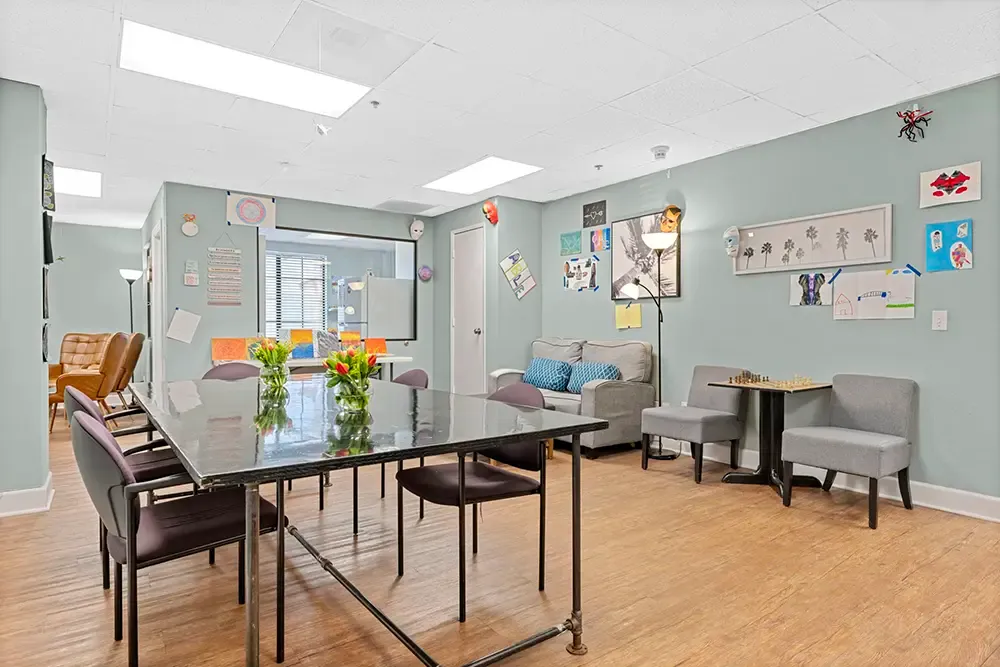
Wings runs two separate residential programs, each with its own office in Carlsbad and its own groups.
 Men's program · 785 Grand Ave #101
Men's residential
Groups only with men, for depression, anxiety, anger and trauma that have started to cost you at work and at home.
Learn more
 Women's program · 2386 Faraday Ave
Women's residential
Groups only with women, with trauma-focused care at your pace, including for sexual and relational trauma.
Learn more
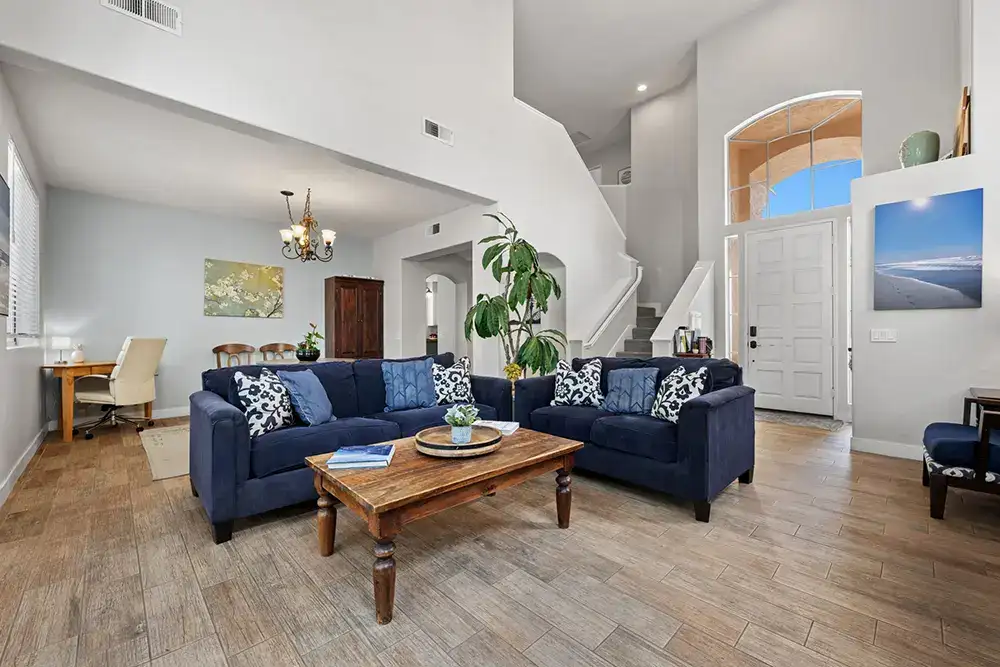
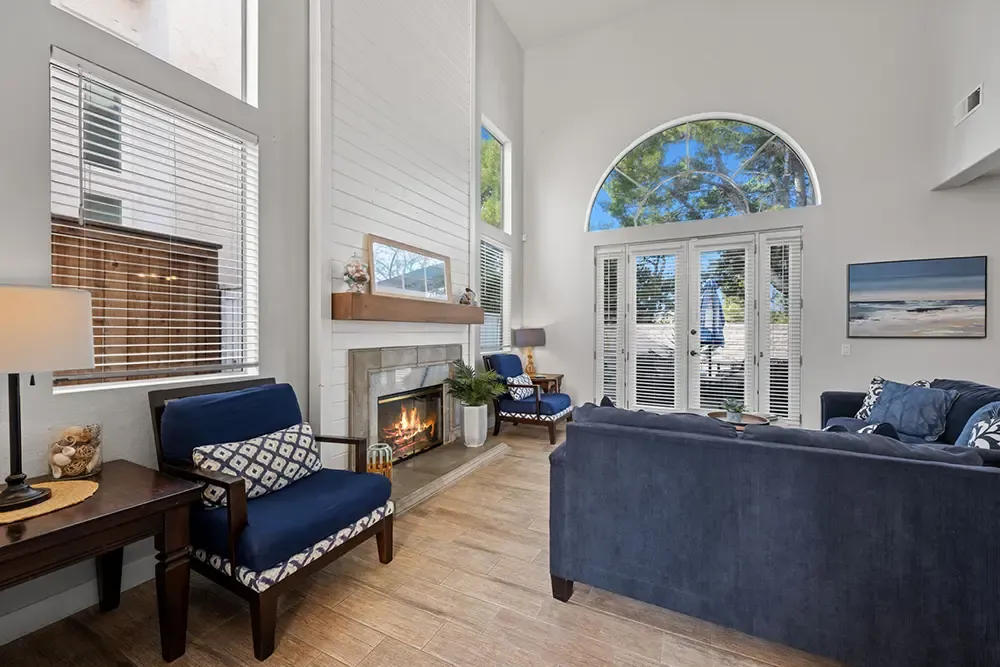
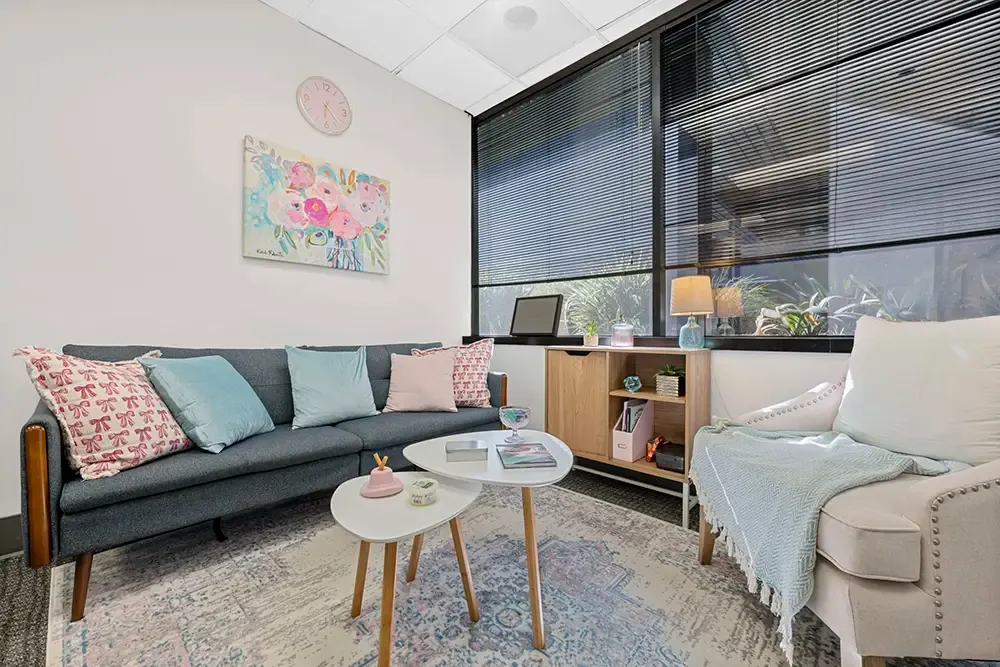
A home in North County San Diego, not a hospital ward
Residential clients live in a state-licensed Wings home in North County San Diego, with staff there around the clock. Open a room to see it larger.
- State-licensed homes
- Staff on site 24/7
- North County San Diego
- State licences →
How long residential lasts, and what comes after
There is no fixed number of days. Your length of stay is set clinically, reviewed as you progress, and depends on what your plan authorizes. When you are ready, you step down, and your therapist steps down with you.
- Step 1 · You are here
Residential
Full therapy days, living at the home with 24/7 support.
- Step 2
Partial hospitalization (PHP)
Treatment five days a week, living in supportive housing or at home.
- Step 3
Intensive outpatient (IOP)
Five days a week to start, morning or evening, back at work or school.
Practical questions about residential living at Wings
Answers about residential, as far as we can give them here. Admissions covers the rest on the phone.
Travel, packing and work
Travel
Admissions helps plan travel to Carlsbad, including from the airport.
Travel and transportation →Work and leave
Admissions can explain FMLA and short-term disability paperwork.
What to bring
A packing list, including medications and documents, before arrival day.
What to bring →
Rooms
Admissions explains the room set-up, in a home with shared living spaces.
Meals
A full kitchen and shared meals at the home.
Phones, laptops and visits
Admissions explains the rules for phones, laptops and visits before you arrive.
Something else?
Pets, smoking or a special diet: ask admissions before arrival day.
Residential admission, from the first call to arrival day
- 1
Call admissions
A short phone screen about what has been happening and what has been tried.
- 2
Assessment and insurance check
A clinical assessment, plus verification and authorization with your plan, at no cost.
- 3
Arrival day
A start date, travel plans and what to bring, worked out with admissions.
Staying in touch with family
Families can stay part of the process with your consent. Admissions explains how visits, phone time and family sessions work in residential before you arrive.
Admissions answers calls 9 a.m.–5 p.m., seven days a week.
Call(760) 388-6369Wings works with many PPO insurance plans
Admissions verifies your benefits before admission, free and confidential. For Medi-Cal or Medicare, admissions can point you to programs that accept them.















Questions about residential treatment
Length of stay, how soon you can start, residential vs inpatient, and insurance.
Don't see your question?
Admissions answers calls 9 a.m.–5 p.m., seven days a week. Calls are confidential.
Call(760) 388-6369Visits, phones, what to bring and more in the admissions FAQ →All the ways to reach Wings →How long does residential treatment last?
There is no fixed number of days. Length of stay is set clinically, reviewed as you progress, and depends on what your plan authorizes. Admissions can explain how it usually works for your situation.
How soon can I start?
Call admissions to find out where things stand today. After a short phone screen, the clinical assessment and an insurance check, admissions helps you set a start date.
Is residential treatment voluntary?
Yes. You agree to treatment and sign your own consent, and you take part in building your plan with your therapists.
What is the difference between residential and inpatient?
Inpatient care is in a hospital, usually short and focused on immediate safety. Residential treatment at Wings is longer, with full therapy days and a home to live in, and is often the next step after an inpatient stay.
Are men and women treated together?
Wings runs a men's residential program and a women's residential program, each with its own office and groups.
Can I keep my phone?
Admissions explains the rules for phones, laptops and visits before you arrive.
Will insurance cover residential treatment?
Wings works with many PPO plans, including Anthem Blue Cross, Blue Shield of California, Cigna, Aetna and UnitedHealthcare. Residential usually needs authorization from your plan, and admissions handles the verification at no cost. If you have Medi-Cal or Medicare, admissions can point you to programs that accept them.