
Self-Harm and Suicidal Thoughts Treatment in California
For adults whose suicidal thoughts or self-harm keep coming back, and who need more than weekly therapy. Residential, PHP and IOP, often as the next step after a hospital stay.
- For people who are medically stable and not in immediate danger
- Often the next step after a hospital stay or a 5150 hold
- A written safety plan and DBT skills
- Support around the clock in residential
- Works with many PPO plans, and verification is free
If this is a medical emergency, call 911. For a mental health or suicide crisis, call or text 988.


When to call 988 or 911, and when Wings can help
Wings is not an emergency service or a hospital. It is treatment for the weeks and months after the crisis, or for thoughts that keep coming back. Admissions assesses every situation, and passive thoughts are looked at case by case.
In immediate danger
Call 911
A plan or intent to act, an injury that needs medical care, or you cannot keep yourself safe right now.
Call 911Or go to the ERIn crisis, but safe for the moment
Call or text 988
Overwhelming thoughts or urges right now, and you need someone to talk to, any time of day or night.
Thoughts that keep coming back
Wings may help
Recurring or passive thoughts (assessed case by case), self-harm that weekly therapy has not stopped, or after a hospital stay once medically stable.
Signs someone may be thinking about suicide
These signs matter most when they are new, getting worse, or follow a loss or a crisis. They apply to you as much as to someone you love.
Talking about dying
Saying they want to die, feel like a burden, or that others would be better off.
Hopelessness
Feeling trapped, with no way out and no reason to keep going.
Pulling away
Withdrawing from friends and family, or saying goodbye in unusual ways.
Drinking or using more
More alcohol or drugs, or reckless and risky behavior.
Giving things away
Putting affairs in order or giving away things that matter to them.
Signs of self-harm
Unexplained cuts, burns or bruises, or long sleeves in warm weather.

A safety plan first, then the pain underneath
A written safety plan
Your warning signs, what helps, who to call and how to keep yourself safe, built with your team and updated as you go.
DBT skills for the hardest moments
Distress tolerance and emotion skills to get through urges without acting on them, practiced every treatment day.
A primary therapist and a trauma therapist
Two clinicians working on the pain under the thoughts, not only the thoughts.
Weekly psychiatry
A medication visit every week, for depression, sleep and anxiety.
Support around the clock in residential
Staff in the home day and night, with full therapy days at the program office.
The days after discharge matter most
A hospital keeps someone safe through the crisis. The weeks after are when the real work starts, and when support matters most. Wings is often the next step, and admissions works with the hospital team so there is no gap.
Coming from a psychiatric hospital stay →Talk to admissions
Patients, families and hospital teams can call. Admissions answers calls 9 a.m.–5 p.m., seven days a week.
Call(760) 388-6369If someone you love is having suicidal thoughts
If you are a parent, partner or sibling, you do not have to have the right words. These steps help.
- 1
Ask directly
Ask if they are thinking about suicide. Asking does not put the idea in their head.
- 2
Listen without arguing
Take it seriously. You do not have to fix it in that conversation.
- 3
Make the home safer
Lock away or remove medications, firearms and other means while things are hard.
- 4
Call together
Call or text 988 with them, and call admissions about treatment.
Residential treatment, then PHP and IOP
The clinical assessment decides where you start. Your safety plan and your therapists stay with you as you step down.

 Days in treatment
Partial hospitalization (PHP)
Treatment five days a week, living in supportive housing or at home.
Learn more
 Around work
Intensive outpatient (IOP)
Five days a week to start, morning or evening, with your safety plan in daily life.
Learn more
Inside the men's and women's offices
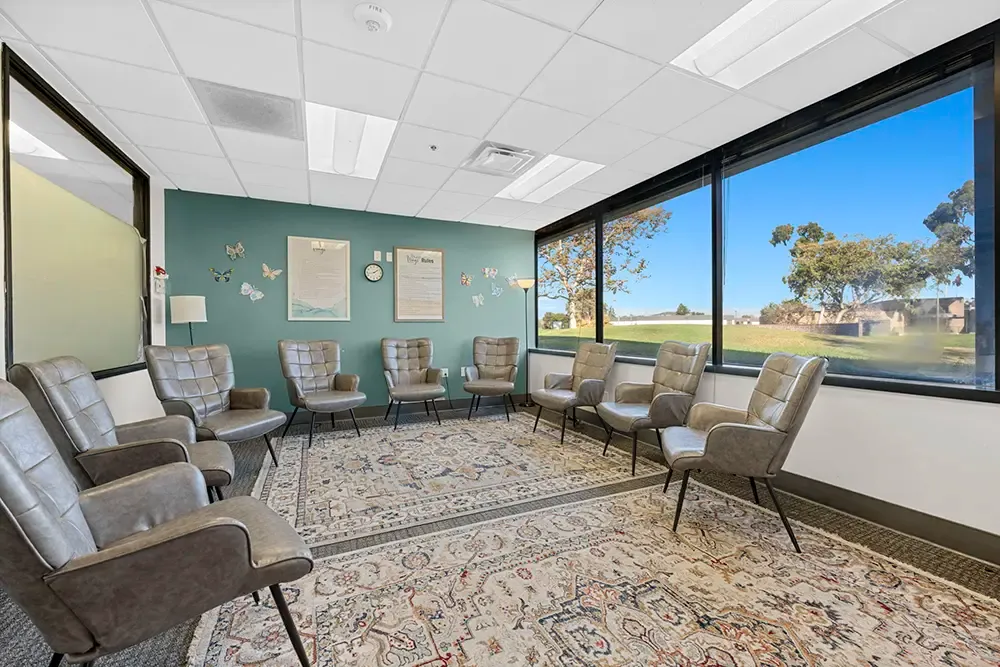
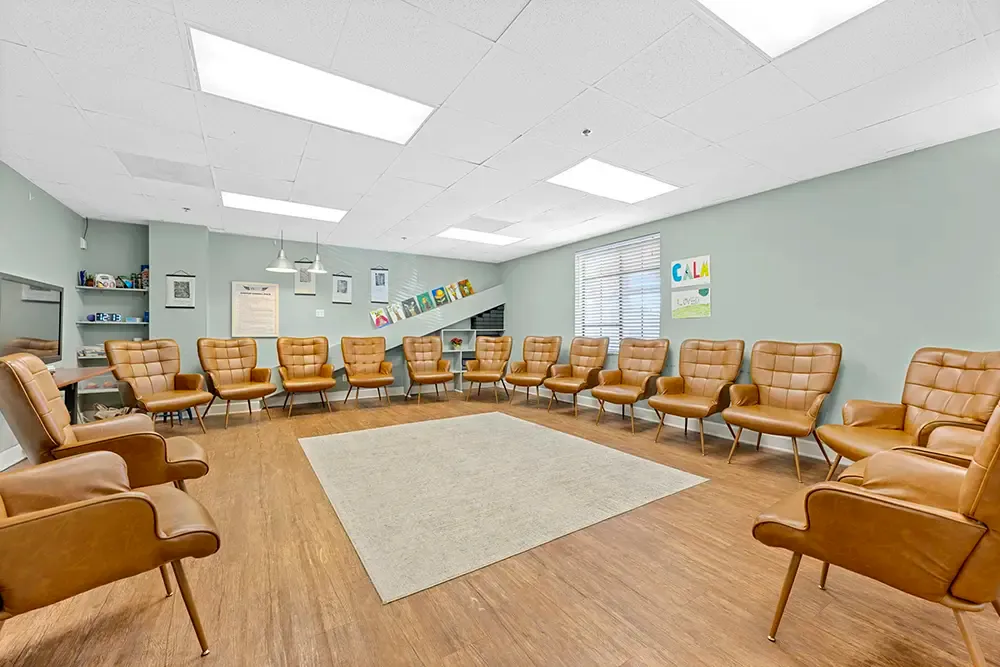
The men's and women's programs each have their own office, the same two locations shown on the maps below. Open a photo to see it larger.
Map and directions ↓Visit our offices in Carlsbad
Office hours: 9 a.m.–5 p.m., seven days a week
Wings Recovery on Google Maps ↗Areas we serve: Carlsbad · San Diego · North County San Diego · Los Angeles · Orange County
The map is provided by Google, which may set cookies, so it loads only once you allow Functional cookies.
Wings works with many PPO insurance plans
Admissions verifies your benefits before admission, free and confidential. For Medi-Cal or Medicare, admissions can point you to programs that accept them.















Questions about treatment for suicidal thoughts and self-harm
Crisis help, who Wings can take, after a hospital stay, families and insurance.
Don't see your question?
Admissions answers calls 9 a.m.–5 p.m., seven days a week. Calls are confidential.
Call(760) 388-6369Visits, phones, what to bring and more in the admissions FAQ →All the ways to reach Wings →What should I do if I am thinking about suicide right now?
If you are in danger right now, call 911 or go to the nearest emergency room. For a suicide or mental health crisis, call or text 988, the Suicide & Crisis Lifeline, any time.
Does Wings accept people with suicidal thoughts?
Yes, when they are medically stable and not in immediate danger. Passive thoughts, such as wishing you would not wake up, are assessed case by case. The clinical assessment decides the right level of care.
Can I come to Wings after a suicide attempt or a 5150 hold?
Yes, once medically stable. Wings is often the next step after a hospital stay or a 5150 hold, and we work with discharge planners on records and timing.
Does Wings treat self-harm?
Yes. Self-harm is treated with DBT skills, individual therapy with a primary therapist and a trauma therapist, and a written safety plan.
My family member talks about not wanting to live. What should I do?
Ask them directly, listen, and make the home safer by removing medications and firearms. If they are in danger, call 911. Otherwise call or text 988 together, and call admissions about treatment.
Are men and women treated together?
Wings runs a men's program and a women's program, each with its own office and groups.
Will insurance cover treatment?
Wings works with many PPO plans, including Anthem Blue Cross, Blue Shield of California, Cigna, Aetna and UnitedHealthcare. Admissions verifies your benefits before admission at no cost. If you have Medi-Cal or Medicare, admissions can point you to programs that accept them.