
OCD Treatment and Recovery in San Diego
For adults whose obsessions and rituals have taken over hours of the day, often alongside depression, anxiety or trauma. Residential, PHP and IOP, with practice every treatment day.
- Structured levels of care for OCD
- CBT, ACT and DBT skills, practiced every treatment day
- Depression, anxiety and trauma treated at the same time
- A medication visit with psychiatry every week
- Works with many PPO plans, and verification is free
If this is a medical emergency, call 911. For a mental health or suicide crisis, call or text 988.


More OCD practice, more support, then back to daily life
OCD gets better with practice: facing the fear without the ritual, again and again. A weekly session leaves you alone with that for six days. At Wings, the practice happens every treatment day, with support close by, then moves into your own life as you step down.
 Most structure
Residential
Practice every treatment day, with support around the clock when urges are strongest, living in a Wings home.
Learn more
 Days in treatment
Partial hospitalization (PHP)
Full treatment days, five days a week, then practicing at home or in supportive housing.
Learn more
 Around work
Intensive outpatient (IOP)
Five days a week to start, morning or evening, using the skills in real life between sessions.
Learn more
OCD is not about being neat
OCD can latch onto almost anything. What the types share is the pattern: a thought you do not want, and a ritual you feel you have to do. Many people have more than one.
Contamination
Fear of germs, illness or dirt, with washing or cleaning that takes hours.
Checking and doubt
Checking locks, stoves or messages again and again, and never feeling sure.
Unwanted intrusive thoughts
Disturbing thoughts about harm, sex or violence that go against who you are.
Symmetry and "just right"
Arranging, ordering or repeating until it finally feels right.
Scrupulosity
Fear of sinning or doing something morally wrong, with confessing or praying to undo it.
Relationship OCD
Constant doubt about a partner or your feelings, and asking for reassurance.
The OCD cycle that treatment breaks
Every ritual brings a little relief, which teaches the brain the fear was real. Treatment works on the compulsion: the less you feed the cycle, the weaker it gets.
- 1
Obsession
An unwanted thought, image or urge shows up.
- 2
Anxiety
Fear, disgust or the sense that something is wrong.
- 3
Compulsion
A ritual, check or reassurance to make it stop.
Where treatment steps in
- 4
Short relief
It eases for a moment, and the cycle gets stronger.
After the short relief, the obsession comes back, often stronger. That is the loop.
Skills, practice and medication, on one plan
CBT, including exposure work
Facing feared thoughts and situations step by step without the ritual, where your therapist and plan include it.
ACT skills
Letting thoughts be there without arguing with them, and acting on what matters to you.
DBT for distress
Skills to ride out the anxiety when you resist a compulsion.
Weekly psychiatry
A medication visit every week. Medication often helps OCD alongside therapy.
Depression, anxiety and trauma treated too
A primary therapist and a trauma therapist, for what comes with the OCD.
When OCD pulls the whole family in
Families often end up answering the same questions, waiting through rituals or changing plans to avoid a trigger. With consent, family can learn how to step out of the cycle and still be supportive.
- Reassurance helps for a moment and feeds the cycle
- Joining in rituals keeps OCD going, even out of love
- Calm, steady support works better than arguing with the fear
Talk to admissions
Family members can call too. Admissions answers calls 9 a.m.–5 p.m., seven days a week.
Call(760) 388-6369When an OCD-only program fits better
Wings is a mental health program that treats OCD alongside the conditions that often come with it. If another program fits better, admissions will say so and help with the next step.
OCD is the only concern and needs an intensive, OCD-only program
Admissions can suggest specialized OCD programs
A primary eating disorder
This needs a specialized eating disorder program
Addiction or detox is the main concern
Admissions will help you find a program that fits
Under 18
Admissions can point you to adolescent care
Inside the men's and women's offices
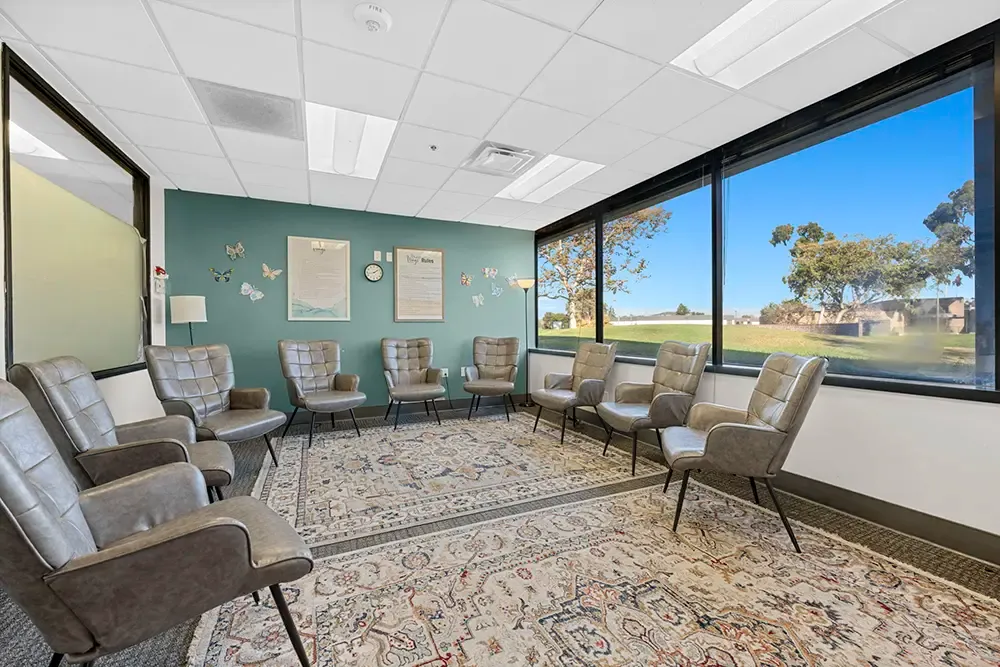
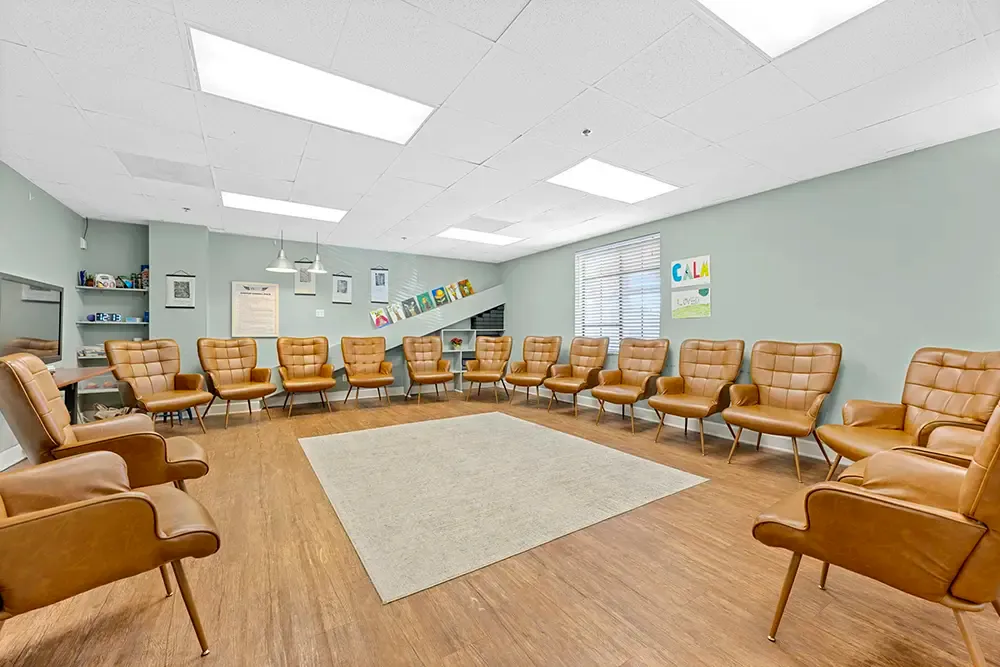
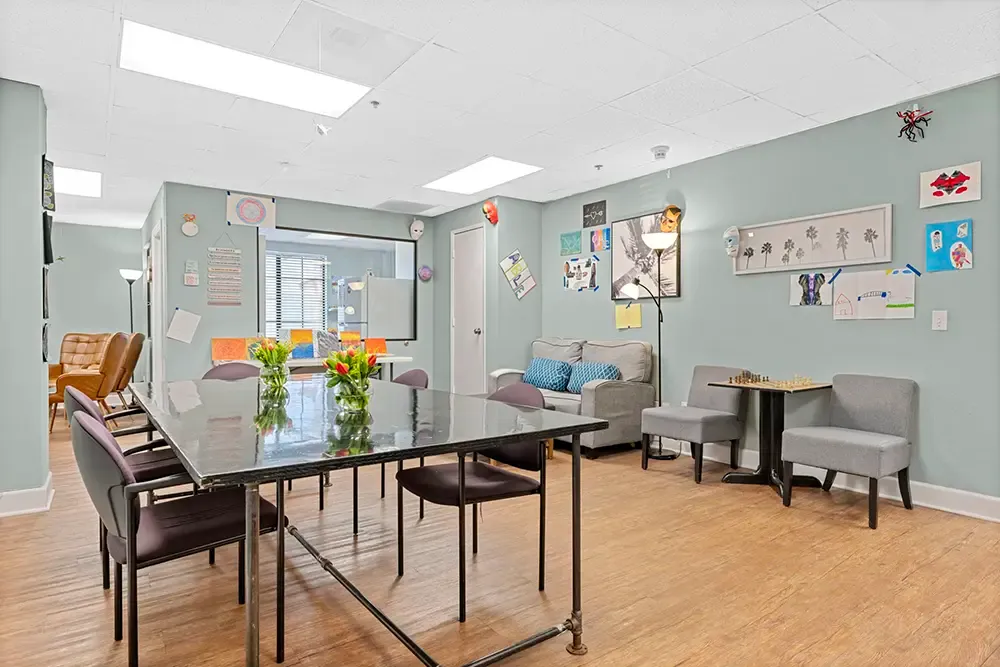
The men's and women's programs each have their own office, the same two locations shown on the maps below. Open a photo to see it larger.
Map and directions ↓Visit our offices in Carlsbad
Office hours: 9 a.m.–5 p.m., seven days a week
Wings Recovery on Google Maps ↗Areas we serve: Carlsbad · San Diego · North County San Diego · Los Angeles · Orange County
The map is provided by Google, which may set cookies, so it loads only once you allow Functional cookies.
Wings works with many PPO insurance plans
Admissions verifies your benefits before admission, free and confidential. For Medi-Cal or Medicare, admissions can point you to programs that accept them.















Questions about OCD treatment
Types of OCD, recovery, when residential makes sense, family and insurance.
Don't see your question?
Admissions answers calls 9 a.m.–5 p.m., seven days a week. Calls are confidential.
Call(760) 388-6369Visits, phones, what to bring and more in the admissions FAQ →All the ways to reach Wings →Does Wings treat OCD?
Yes. Wings treats adults with OCD in residential, PHP and IOP, especially when it comes with depression, anxiety or trauma. The clinical assessment decides the right level of care.
What are the different types of OCD?
Common types include contamination, checking and doubt, unwanted intrusive thoughts, symmetry and "just right" feelings, scrupulosity and relationship OCD. Many people have more than one.
Is recovery from OCD possible?
Yes. Therapy, and often medication, can loosen OCD’s grip. Recovery means the thoughts lose their grip and the rituals stop running your day.
When is residential treatment for OCD the right step?
When weekly therapy has not been enough and OCD is taking hours of your day, keeping you from work, or coming with depression or other conditions that need daily care.
Can my family be involved?
Yes, with consent. Family can learn how reassurance and joining in rituals keep OCD going, and how to support you instead.
Are men and women treated together?
Wings runs a men's program and a women's program, each with its own office and groups.
Will insurance cover OCD treatment?
Wings works with many PPO plans, including Anthem Blue Cross, Blue Shield of California, Cigna, Aetna and UnitedHealthcare. Admissions verifies your benefits before admission at no cost. If you have Medi-Cal or Medicare, admissions can point you to programs that accept them.