
Trauma Therapy and PTSD Treatment in San Diego
For adults who have done years of therapy and still feel run by what happened. At Wings, a trauma therapist is on every team, and care starts with stabilization before deeper trauma work.
- Trauma-focused, not only trauma-informed
- Four individual sessions a week in residential, two with a trauma therapist
- EMDR and other trauma therapies, at your pace
- Separate programs for men and women
- Works with many PPO plans, and verification is free
If this is a medical emergency, call 911. For a mental health or suicide crisis, call or text 988.


Trauma-focused, not only trauma-informed
Many programs describe themselves as trauma-informed and then ask you to deal with everything else first. At Wings, trauma is part of the plan from the start, even when depression or anxiety is what brought you in.
Trauma-informed
Trauma-focused at Wings
Staff are aware trauma may be part of your story
A trauma therapist is on your team from the first week
Trauma may never become the focus of treatment
Stabilization first, with medication and coping skills, then trauma processing
Mostly talking about what happened
Trauma therapies such as EMDR to work on what keeps it going
One therapist, often once a week
Four individual sessions a week in residential: two of them trauma sessions
How trauma can show up years later
Trauma is not only about what happened. It is what keeps happening afterwards, in the body, in sleep and in relationships, often long after the event itself.
Reliving it
Memories, nightmares or flashbacks that come back without warning.
Always on alert
Poor sleep, jumpiness, and a body that never fully settles.
Avoiding reminders
Places, people or feelings you steer around, until life gets smaller.
Numb, low or on edge
Depression, anxiety, anger or feeling disconnected from yourself.
Relationships that keep hurting
Trust that is hard to give, and patterns that repeat.
Coping that costs you
Drinking, drug use or self-harm to get through what you feel.
PTSD
After a specific event, such as an assault, an accident, combat or a duty-related call. PTSD is treated here, in the same trauma program, with EMDR and a trauma therapist.
How PTSD is treated
Complex trauma and C-PTSD
Trauma that went on for a long time, often in childhood or in a relationship, including dissociation. Why length of stay matters.
Complex trauma treatment
Two tracks at once: stabilization and deeper trauma work
A primary therapist and a trauma therapist
Two clinicians on your team, with two trauma sessions every week in residential.
Steadier first, then deeper
Skills to manage sleep, panic and urges come first, so trauma work happens on solid ground and at your pace.
Trauma therapies
Therapists trained in EMDR, Brainspotting and Internal Family Systems (IFS), depending on your therapist and your plan.
Skills groups
DBT, CBT and ACT skills groups, in a program only for men or only for women.
On-site psychiatry
A medication visit every week, including for sleep, nightmares, mood and anxiety.
Trauma care in a program for men or for women
Trauma is easier to talk about in a group that shares some of your experience. Wings runs two separate programs, each with its own office in Carlsbad and its own groups.

Men's program
Trauma that often shows up as depression, anger, drinking or stress at work, including duty-related trauma for first responders and veterans.
Men's mental health treatment

Women's program
Care for sexual and relational trauma, and trauma that started in childhood, in groups only with other women.
Women's mental health treatment
Residential trauma treatment, then PHP and IOP
Trauma work can stir things up before it settles them. Residential gives the most structure and support while that happens, and you keep the same therapist as you step down.
- Step 1
Residential
Full therapy days and support 24/7, the most structure while trauma work begins.
Learn more
- Step 2
Partial hospitalization (PHP)
Treatment five days a week, living in supportive housing or at home.
Learn more
- Step 3
Intensive outpatient (IOP)
Five days a week to start, morning or evening, around work.
Learn more
When another program or level of care fits better
If another program would serve you better, admissions will say so and help with the next step.
Addiction or detox is the main concern
Admissions will help you find a program that fits
Active psychosis or a primary eating disorder
These need a different level of care
Under 18
Admissions can point you to adolescent care
Weekly therapy is enough for now
Admissions can suggest outpatient options
Inside the men's and women's offices
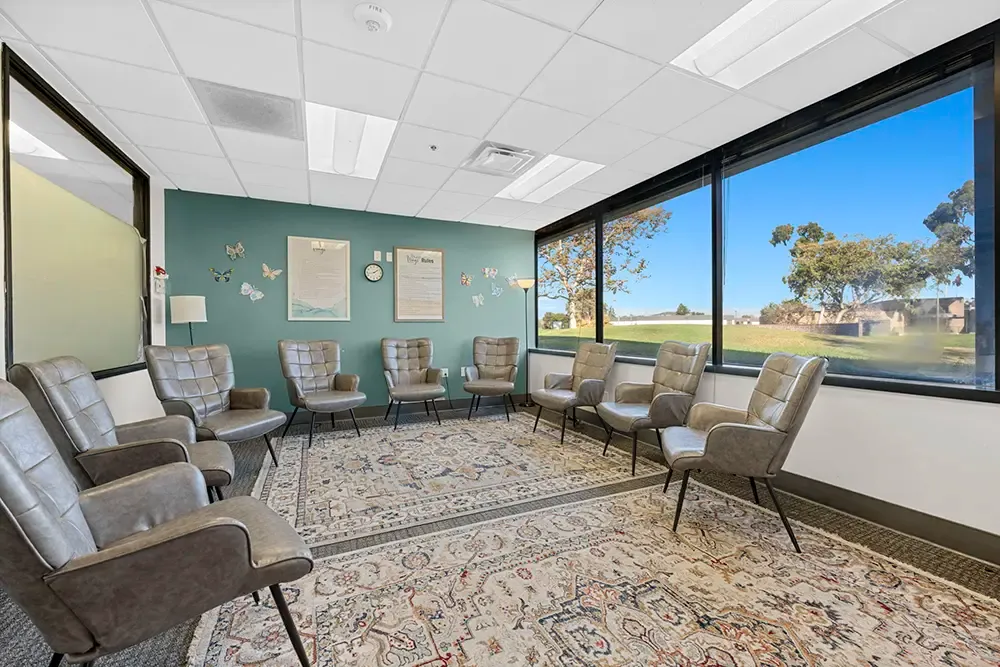
The men's and women's programs each have their own office, the same two locations shown on the maps below. Open a photo to see it larger.
Map and directions ↓Visit our offices in Carlsbad
Office hours: 9 a.m.–5 p.m., seven days a week
Wings Recovery on Google Maps ↗Areas we serve: Carlsbad · San Diego · North County San Diego · Los Angeles · Orange County
The map is provided by Google, which may set cookies, so it loads only once you allow Functional cookies.
Wings works with many PPO insurance plans
Admissions verifies your benefits before admission, free and confidential. For Medi-Cal or Medicare, admissions can point you to programs that accept them.















Questions about trauma treatment
Trauma-focused care, EMDR, going at your own pace, and insurance.
Don't see your question?
Admissions answers calls 9 a.m.–5 p.m., seven days a week. Calls are confidential.
Call(760) 388-6369Visits, phones, what to bring and more in the admissions FAQ →All the ways to reach Wings →What is the difference between trauma-informed and trauma-focused care?
Trauma-informed means staff are aware trauma may be part of your story. Trauma-focused, as at Wings, means trauma is a planned part of treatment: a trauma therapist is on your team, care starts with stabilization, and trauma therapies such as EMDR follow as you are ready.
Do I have to talk about what happened right away?
You and your therapists set the pace. Skills to feel steadier come first, and trauma therapies are added as you are ready.
Does Wings offer EMDR?
Yes. Wings therapists are trained in EMDR, and many also use Brainspotting and Internal Family Systems (IFS). Which therapies you receive depends on your therapist and your plan.
I have been in therapy for years. Why would this be different?
Residential treatment gives trauma work more time and structure than a weekly session: four individual sessions a week, two with a trauma therapist, plus groups and psychiatry.
Can Wings treat trauma alongside drinking or drug use?
If mental health is the main concern, yes. Substance use that comes with trauma is treated as part of the plan. If addiction is the primary problem, admissions will help you find a program that fits.
Are the men and women treated together?
Wings runs a men's program and a women's program, each with its own office and groups.
Will insurance cover trauma treatment?
Wings works with many PPO plans, including Anthem Blue Cross, Blue Shield of California, Cigna, Aetna and UnitedHealthcare. Admissions verifies your benefits before admission at no cost. If you have Medi-Cal or Medicare, admissions can point you to programs that accept them.